Or continue below to see our UAV and EVTOL products.
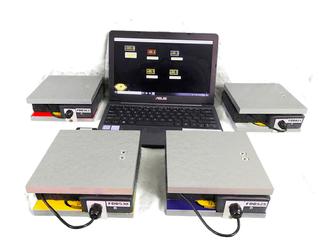
We have Drone/UAV/UAS low weight scale systems available in two, three or four platform sets.
You can now weigh your Drone/UAV/UAS to meet the FAA 55 lb rule with our system.
This is a specifically built scale system for Drone weighing. Small Drones up to 55 lbs and large Drones over 55 lb. If you have a commercial Drone/UAV/UAS aircraft and are applying for certification status, this system can provide you with several features: Weight at each point. Total weight Empty weight Stores change weights for BEOW calculations CG of centroid mass both Fore and Aft as well as Lateral for balance calculations.
We are the supplier to: many drone programs, AIRBUS Vahana program, MQ8 program, BELL APT, yes we supply them all. Low weight medium weight and heavy weight scales are available.
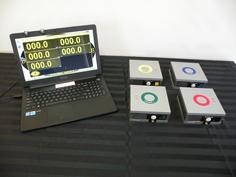
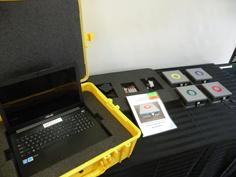
Our low weight range UAV/UAS/Drone systems are capable of light weight units up to 150 lbs per pad, full wireless laptop system.
Four pad system, click on the picture above to go to our UAV page
Wireless Laptop with 150 lb platforms, click the picture above to go to our UAV page
The Aircraftscales.com Drone weighing scale system is made of 4 each 150 lb capacity aircraft weighing scales.
Normal aircraft scales may not have the accuracy required for light weight Drone/UAV/UAS applications.
Our drone weighing system has a base plate for use which provides a level platform on which you can mount your drone scales. Our four platform system has individual gear levelers to enable the user to level the drone.
Weight display during this process is critical, proper gear placement and contact is also critical. Our system was specially designed to remove all the complications of weighing a 4 point drone.
Stick type gear drones, T bar type gear drones, and other types can be weighed with accuracy and ease. Unlike other Drone/UAV/UAS scales offered on the internet, our systems are task specific.